Choosing Between DT & TTR
Understand the benefits and differences between direct thermal (DT) and thermal transfer ribbon (TTR) printing.

Choosing the right thermal transfer printer can make a significant difference in print quality, efficiency and long-term operating costs. Flat-head and near-edge printing each offers unique advantages tailored to different labeling needs, environments and production speeds. Understanding how these two print methods differ in design, performance and ribbon compatibility is key to selecting the best option for your application.
Flat head thermal transfer printers feature a fixed, horizontal print head and heat element. As the transfer ribbon and the substrate simultaneously pass through the heating element, ink from the ribbon is transferred to the substrate. Upon ink transfer, both the ribbon and substrate pass through a set distance together while the ink dries before being separated.
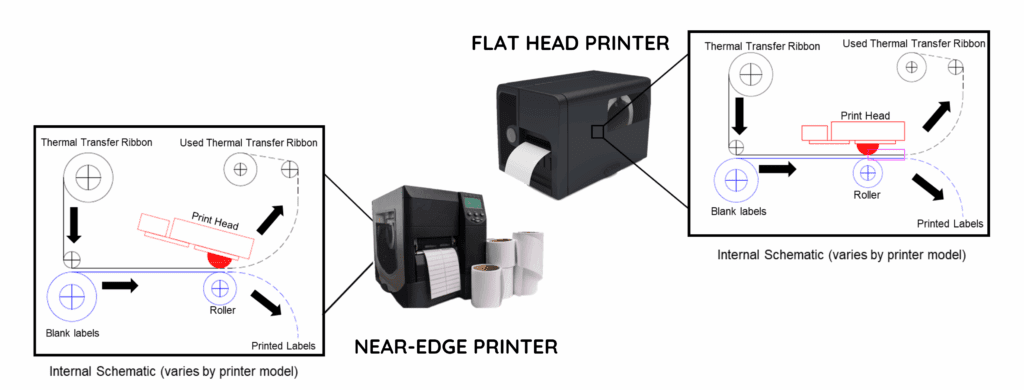
Near edge, or “corner edge” printers feature an angled floating print head. The heat element for these printers can be found at the edge of the print head. This allows for higher print speeds & rapid ink transfer as the substrate and ribbon meet for only an instant. Unlike flat-head printers, near-edge printers require specialized ribbons in order to ensure this rapid ink transfer.

Understand the benefits and differences between direct thermal (DT) and thermal transfer ribbon (TTR) printing.

Determine the best adhesive for your application, considering crucial factors.
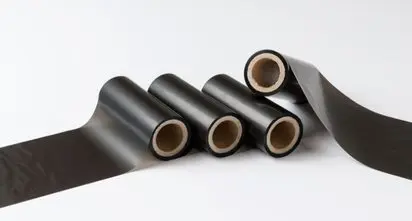
Thermal transfer ribbon produces a durable, high-quality print. Read all you need to know to choose the right ribbon for your application.
Stay connected with the latest from Ricoh Electronics — news, updates, and more.