Flat Head vs Near Edge Printer Overview
Thermal transfer ribbon printers are divided into two main types- flat head and near edge. Explore key differences, advantages, and features of each.

Thermal transfer printing creates high-quality, smudge-resistant images that can withstand environmental factors such as moisture, chemicals and extreme temperatures, depending on the ribbon and substrate used. This process involves applying heat to a ribbon to transfer ink onto materials, such as polyester film, paper-based labels or fabric. However, not all ribbon and substrate combinations offer the same durability and print quality. To achieve optimal results with the end-use application in mind, it is essential to understand the differences between the three main types of thermal transfer ribbons: resin, wax-resin and wax.
Full resin thermal transfer ribbons offer a premium option, providing superior durability when faced with weather conditions, extreme temperatures, chemical exposure and abrasion or frequent touch. Resin ribbons are ideal for challenging labeling applications such as automotive, electronics, textile, medical and drum labels. No matter the application, full resin ribbons are the most resilient solution against environmental factors, scratching and smearing. Additionally, full resin TTR provides the most precise image quality compared to wax-resin and wax counterparts, making it ideal for small-surface printing. For these reasons, full resin thermal transfer ribbons are typically the most expensive option but produce the longest-lasting and most high-quality prints while requiring lower print speeds.
As the name indicates, wax-resin thermal transfer ribbons use a blend of wax and resin materials to print. These ribbons offer moderate pricing and robustness, printing well on both film-based and paper-based substrates. While not as resistant to harsh environments as resin, wax-resin ribbons are well suited for many applications, including inventory control barcoding, date coding, retail tags and ticketing (among others), offering a reliable, high-quality print resistant to scratches and smears. Wax-resin TTR bridges the gap between full resin performance and full wax affordability. Wax-resin thermal transfer ribbons perform well within a wider range of print temperatures than full-resin and require moderate print speeds.
Full wax thermal transfer ribbons provide the lowest level of durability. While these are the most common and affordable TTR, they do not offer the longevity associated with wax-resin or full resin ribbons and provide limited protection against abrasion and smears. Wax ribbon applications overlap with direct thermal applications, such as warehouse, shipping and high-volume labeling. Wax TTR may produce crisp clear images but does not afford the precision associated with wax-resin or resin thermal transfer prints. Ricoh Electronics carries a selection of high-quality resin and wax-resin thermal transfer ribbons designed for superior durability and print clarity.
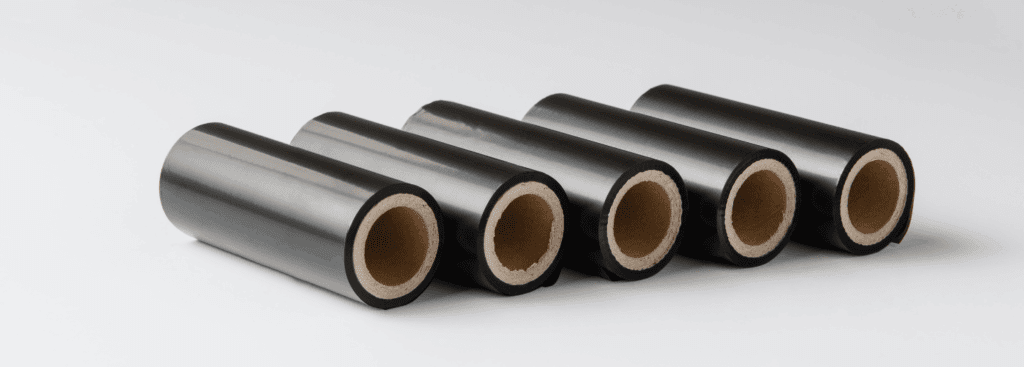
When selecting a thermal transfer ribbon, it’s essential to consider not just ribbon composition but also printer compatibility. The printer type determines whether the ribbon must be coated side in (CSI) or coated side out (CSO). Coated side in (CSI) ribbons have a shinier appearance and unwind from the top, while coated side out (CSO) ribbons unwind from the bottom. Additionally, it is important to determine the print head type, flat-head or near-edge, to choose the appropriate thermal transfer ribbon. Essentially, flat-head printers will have a fixed print head and heating element, while near-edge printers utilize a floating angled print head.
Once printer specifications are understood, substrate matching is crucial for optimal print results. While some ribbons print well across a range of substrates, others are more specialized. For example, textile-specific TTR may not be best suited for film-based or paper-based media. Consider the label material when choosing the best thermal transfer ribbon for the intended application. For a detailed guide on ribbon and substrate compatibility, refer to our Substrate Matching Guide.
Choosing the right thermal transfer ribbon is essential for achieving the best print quality and durability for specific application needs. Resin ribbons provide the highest level of resistance to harsh environments, wax-resin ribbons offer a balance of cost and performance, and wax ribbons remain a cost-effective choice for everyday labeling needs. Additionally, considering factors such as printer compatibility, coated side orientation and substrate matching can further optimize print results. By selecting the appropriate ribbon, businesses can ensure long-lasting, high-quality prints that meet operational demands. To explore Ricoh Electronics’ comprehensive range of thermal transfer ribbons and find the best fit for your needs, browse our thermal transfer ribbons products.
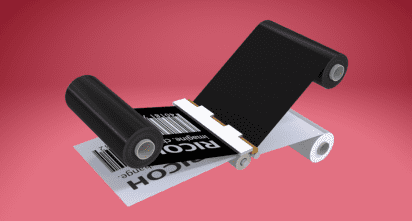
Thermal transfer ribbon printers are divided into two main types- flat head and near edge. Explore key differences, advantages, and features of each.

Understand the benefits and differences between direct thermal (DT) and thermal transfer ribbon (TTR) printing.

New BPS regulations are impacting business operations and .consumer purchasing. Learn how California’s Proposition 65 may affect your business
Stay connected with the latest from Ricoh Electronics — news, updates, and more.